If you’ve been quietly dreading the moment your Small Business Relief runs out, you can relax — for now. The UAE just handed small businesses and start-ups a longer runway on corporate tax in the UAE, and it’s worth understanding exactly what changed before you assume it applies to you.
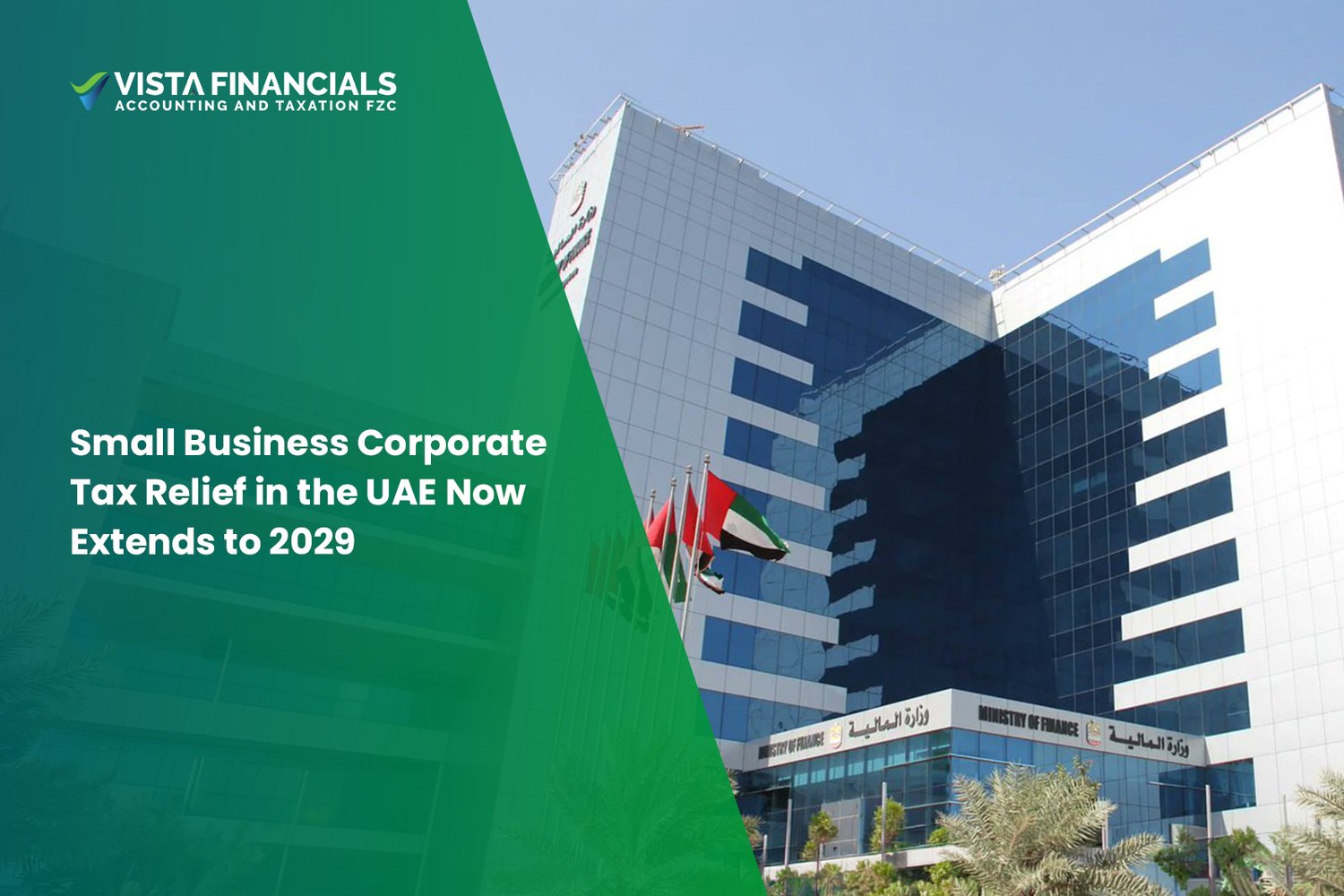
On 7 August 2026, the UAE Ministry of Finance confirmed that Ministerial Decision No. 131 of 2026 pushes the window for claiming Small Business Relief out to tax periods ending on or before 31 December 2029 — three additional tax periods beyond the original 31 December 2026 cut-off. For business owners who’d been mentally preparing for the relief to disappear next year, that’s a meaningful reprieve.
Here’s the part that hasn’t moved, though: the AED 3 million annual revenue threshold is exactly where it was. So while you’ve got more time to benefit, the rules around who actually qualifies haven’t changed at all.
What Small Business Relief Actually Does
Small Business Relief isn’t new — it was originally introduced under Article 21 of Federal Decree-Law No. 47 of 2022, the law that governs corporate tax in the UAE, with the detailed conditions and mechanics set out in Ministerial Decision No. 73 of 2023. What just changed now is how long you get to use it, not what it actually does.
Here’s what it means for you: if your revenue sits at or below the AED 3 million threshold for the relevant tax period — and every prior tax period the rules cover — you can elect to have your business treated as having zero taxable income for that period. That translates to a 0% corporate tax bill, plus the relief of simplified record-keeping instead of full IFRS-standard financial statements.
For a freelancer just getting started, a small trading company, or an early-stage start-up still finding its footing, that combination — no tax bill and lighter paperwork — genuinely matters. It’s breathing room during the years when every dirham of cash flow counts.
Who Actually Qualifies for Corporate Tax Relief?
Here’s where a lot of business owners trip up: having revenue under AED 3 million doesn’t automatically mean you qualify. The Federal Tax Authority is specific about this — the relief is available to a Resident Person for corporate tax purposes, covering both natural persons and juridical persons, but only if the conditions are met.
The core condition: revenue of AED 3 million or less — and here’s the part that catches people off guard — that applies not just to your current tax period, but to every previous tax period the rules cover as well.
What that looks like in practice:
- Scenario A — you likely qualify: Your revenue came in at AED 1.8 million in Year 1, AED 2.4 million in Year 2, and AED 2.6 million in Year 3. Every period stayed under the threshold, so assuming the other conditions are met, you’d likely still be eligible across the board.
- Scenario B — you could be shut out, even now: Your revenue hit AED 3.4 million in Year 1, then dropped to AED 1.5 million in Year 2. Even though your current revenue looks well within range, crossing the threshold in that earlier period can disqualify you going forward — the FTA has actually published an example illustrating exactly this trap.
The takeaway: a strong year doesn’t just affect that year’s eligibility — it can quietly follow you into future periods, even after your revenue drops back down. That’s why it’s worth checking your full revenue history, not just your latest numbers, before assuming you qualify.
Who’s Excluded, Even Under the Threshold?
Two categories get ruled out regardless of how low their revenue sits:
Qualifying Free Zone Persons (QFZP): If your business holds QFZP status, Small Business Relief simply isn’t on the table — the two regimes are treated as separate tracks. This is exactly why free zone businesses should nail down their correct corporate tax status early, rather than assuming SBR applies by default.
Members of large multinational groups. If your business belongs to a Multinational Enterprise Group with consolidated group revenue above AED 3.15 billion, you’re excluded too — no matter how small your own local revenue is.
To summarize it, clearing the AED 3 million bar is necessary, but it’s not sufficient on its own.
The Real Story Behind Ministerial Decision No. 131 of 2026
Let’s zoom out on what actually happened here.
The Ministry of Finance’s latest announcement amended the earlier Ministerial Decision No. 73 of 2023 — the original decision that set up Small Business Relief in the first place. The change is narrow and specific: it extends the claim window to tax periods ending on or before 31 December 2029, replacing what was previously a 31 December 2026 cut-off.
Three full years of extra runway — nothing more, nothing less. The AED 3 million revenue threshold itself, set back under that 2023 decision, hasn’t budged, and it continues to apply from tax periods starting 1 June 2023 all the way through to the new 2029 end date. In its announcement, the Ministry framed this as part of a broader effort to support small businesses and start-ups, ease their compliance load, and keep the UAE an attractive place to build a company — all while staying aligned with international tax standards.
Does This Relief Applies Automatically?
This is genuinely one of the most misunderstood parts of the whole system: Small Business Relief is not automatic. Even if you’re sitting comfortably under AED 3 million in revenue, you still need to actively elect for the relief for each relevant tax period through your corporate tax return.
That distinction matters more than it might seem. Being under the revenue threshold doesn’t erase your corporate tax obligations — you still need to be registered for corporate tax, and you still need to file. The FTA is explicit that an eligible business must first complete corporate tax registration before making the Small Business Relief election on its tax return.
Also Read: UAE Corporate Tax Filing: What Small Business Relief Doesn’t Exempt You From
What This Extension Actually Means for Your Business
Pulling this all together, here’s the practical takeaway for UAE small businesses and start-ups:
You’ve bought yourself more time. If you were watching a 2026 deadline creep closer, you now have three additional tax periods where 0% corporate tax remains realistically achievable — as long as you stay under the AED 3 million line.
Filing obligations haven’t gone anywhere. Zero tax owed doesn’t mean zero paperwork. The Federal Tax Authority has continued reminding small businesses that filing on time is still required, even when there’s no tax due. So, if your company follows a January to December financial year and your tax period ended on 31 December 2025, then your corporate tax filing deadline is 30 September 2026.
This changes the free zone conversation. If you’ve been weighing Qualifying Free Zone Person status against Small Business Relief, you now have a longer horizon to plan that decision around, since the relief window itself has shifted out to 2029.
Don’t set it and forget it. Because eligibility hinges on cumulative revenue going all the way back to June 2023, you’ll want to reassess your position every single tax period — last year’s eligibility isn’t a guarantee for this year.
What If You Cross the AED 3 Million Line?
The threshold remains one of the sharpest edges in this whole system. Exceed AED 3 million in a relevant tax period, and you can lose access to the relief — and as covered earlier, that loss can echo into future periods even after your revenue comes back down.
Because of that carry-forward effect, it’s worth tracking your revenue throughout the year rather than waiting until your tax period closes to check where you stand.
Think Before You Opt: Why Electing for Relief Isn’t Always the Obvious Choice
Now, here’s an opinion worth sitting with: just because you can elect for Small Business Relief doesn’t automatically mean you should. Most of the coverage around this extension treats the decision as a no-brainer — free money, zero tax, why wouldn’t you take it? But if you’re building a business with any real ambition, that framing misses a few things.
A 0% tax bill today can quietly cost you later. Electing into Small Business Relief means you’re taxed as having no taxable income — which sounds great until you remember that simplified record-keeping usually means you’re not building the detailed, IFRS-aligned financial history that investors, banks, and acquirers tend to want to see.
If you’re planning to raise funding, apply for growth financing, or position your company for a sale in the next few years, the paperwork you skip today might be the paperwork someone demands tomorrow — at a much less convenient moment.
Relief is a status you can lose, sometimes without noticing. Because eligibility depends on cumulative revenue since June 2023 rather than just your current year, a strong quarter can retroactively complicate your position in ways that aren’t obvious in the moment.
A business growing quickly toward the AED 3 million line should think about that trajectory now, not scramble to reconstruct proper accounts after the fact once relief quietly falls away.
Free zone businesses face a genuine trade-off, not just a technicality. Choosing Qualifying Free Zone Person status over Small Business Relief (or vice versa) isn’t purely a compliance checkbox — it’s a strategic bet on how your business will look in three or four years.
QFZP status can offer its own long-term tax advantages once you scale past the small-business bracket, and locking into the SBR mindset early can make that later transition feel more disruptive than it needs to be.
“No tax due” doesn’t mean “no scrutiny.” A business that’s paid zero corporate tax for years but is trying to show strong financials to a lender or investor may find that story harder to tell with simplified records than with a fuller accounting trail. The relief protects your cash flow, not necessarily your credibility with people evaluating your business from the outside.
None of this means Small Business Relief is a bad choice. For a huge number of freelancers, early-stage founders, and small trading businesses, it’s exactly the right call, and the extension to 2029 is a genuine win. But it’s worth treating the election as a strategic decision each year, not a default setting you flip on and forget. If growth, funding, or an eventual exit is anywhere on your roadmap, it’s worth running the numbers on what you’re trading away in exchange for that 0% today.
Getting Corporate Tax Registration and Compliance Right
None of this happens in isolation — Small Business Relief sits inside the broader UAE corporate tax registration and compliance framework, and getting that foundation right is what actually protects your ability to claim the relief in the first place. Whether you’re weighing this against free zone benefits, planning to scale past the AED 3 million threshold, or simply want a second set of eyes on your eligibility, working with experienced corporate tax consultants in Dubai can save you from losing relief you were entitled to, purely through an avoidable filing misstep.
If you’re unsure where your business stands — or you want a proper corporate tax advisory service before you make your election — now’s the moment to get that clarity, not after your filing deadline is bearing down on you.
Want expert eyes on your Small Business Relief eligibility and corporate tax compliance ahead of your next filing? Get in touch with our team for a straightforward review of your revenue position, tax strategy and filing.