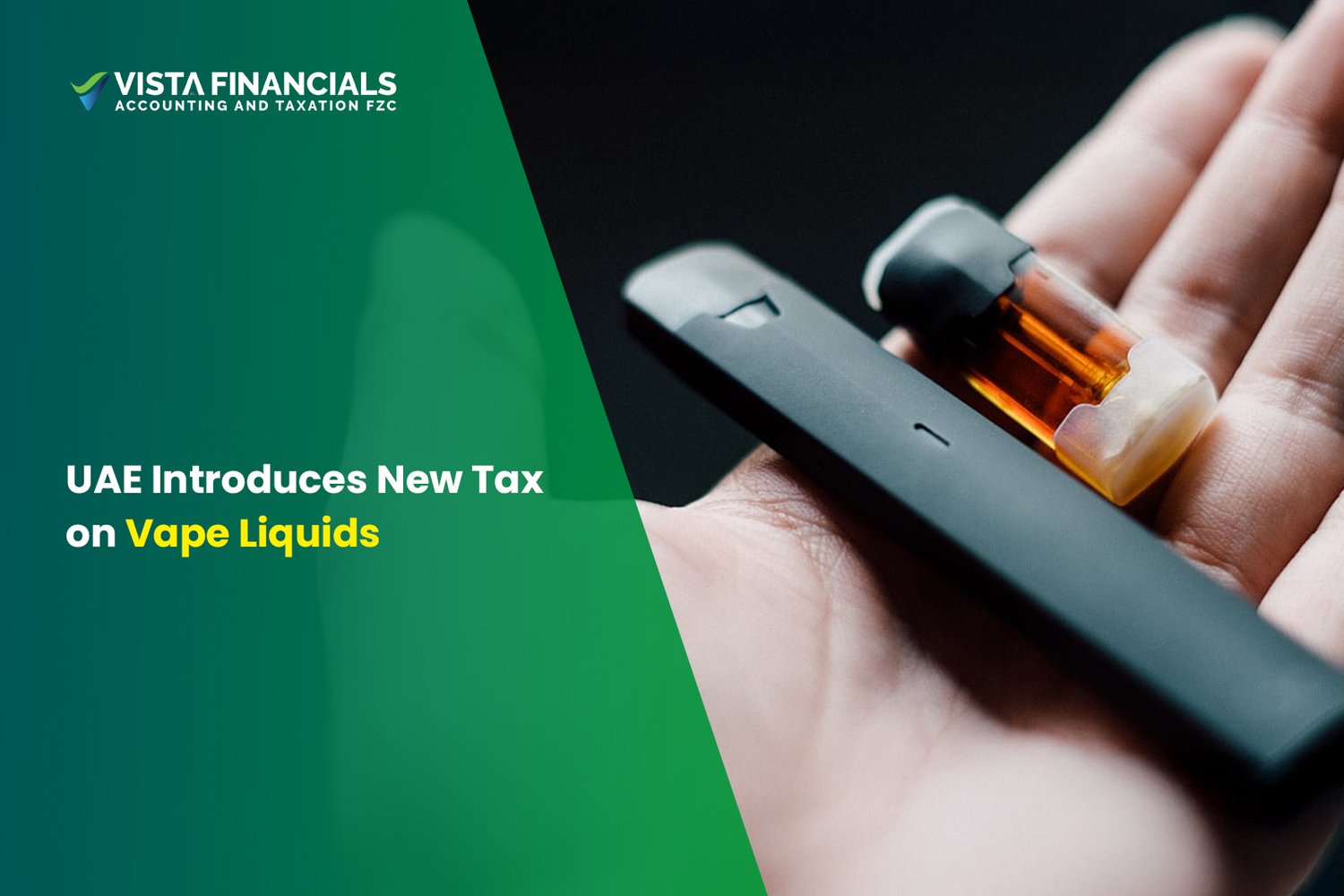
The UAE has introduced a new tax rule targeting e-cigarette liquids, effective September 1, 2026.
Starting that date, every millilitre of e-liquid sold in the country will be taxed as though it costs at least Dh1 — even if the actual retail price is lower.
Here’s exactly what the UAE Ministry of Finance announced, why, and what it means in practice.
New Tax in the UAE: What Exactly Changed?
The UAE Ministry of Finance introduced a minimum excise price of Dh1 per millilitre for liquids used in electronic smoking devices, effective September 1, 2026.
The decision was announced on August 6, 2026. It doesn’t touch the tax rate. It touches the tax base — the minimum value the tax gets calculated against.
That distinction matters more than it sounds.
What the New Tax Rate Actually Is
The UAE’s existing 100% excise tax rate on tobacco and e-smoking products has not changed. What’s new is the minimum price the tax gets calculated on.
Previously, if a retailer sold a bottle of e-liquid at a low price, the excise tax was calculated on that low price. The lower the sale price, the lower the tax paid.
Now there’s a floor: even if a retailer prices a bottle below Dh1/ml, tax authorities will calculate the excise tax as if it were priced at Dh1/ml.
Importantly, the 100% excise tax applies on top of this Dh1/ml minimum price—it is not a replacement for the excise tax, and it is not the tax itself. The Dh1/ml figure sets the minimum taxable value; the 100% excise rate is then charged on top of that value.
So for any e-liquid priced below the threshold, the actual tax paid effectively doubles the Dh1/ml minimum value, not the original lower sale price.
Here’s the math, worked through:
- A 60ml bottle priced at Dh40 works out to roughly Dh0.67/ml — under the new Dh1/ml floor.
- From September 1, that bottle gets taxed as though it costs Dh60, not Dh40.
- The 100% excise rate then applies on top of that Dh60 figure, not the actual Dh40 sale price.
So the retail price doesn’t have to change. But the tax bill on that bottle just did.
Why Is This Happening Now?
The Ministry of Finance says the new tax rule closes a pricing gap that allowed cheaper e-liquids to carry lower tax exposure than intended.
The Ministry states the decision is meant to:
- Keep pace with developments in the excise goods market
- Apply unified standards consistently across all tobacco and e-smoking categories
- Support tax compliance
- Limit pricing practices that undermine effective excise tax enforcement
In effect, underpriced vape liquid had become a way to reduce tax exposure. This new rule closes that gap.
The Broader UAE Excise Tax Framework
The UAE’s broader “sin tax” system dates back to October 2017, and it now includes a tiered, sugar-based tax on sweetened beverages, not the flat rate that used to apply.
Under the current framework:
- Tobacco products, e-smoking devices, and their liquids: 100% excise tax
- Energy drinks: 100% excise tax
- Sweetened beverages: taxed on a tiered, sugar-content basis, not a flat rate
That last point is worth spelling out, since the model changed significantly at the start of this year. Until December 31, 2025, sweetened drinks were taxed at a flat 50% rate regardless of sugar content.
From January 1, 2026, under Cabinet Decision No. 197 of 2025, the UAE replaced that flat rate with a tiered volumetric model, taxing sweetened beverages per litre based on sugar content per 100ml:
- Under 5g of sugar per 100ml: exempt from excise tax
- 5g to under 8g per 100ml: Dh0.79 per litre
- 8g or more per 100ml: Dh1.09 per litre
- Drinks containing only artificial sweeteners: exempt
Businesses producing, importing, or stockpiling sweetened drinks are required to obtain an Emirates Conformity Certificate confirming sugar and sweetener content, backed by accredited laboratory testing. A sweetened drink without a valid certificate is automatically classified as high-sugar by default until lab results prove otherwise.
The September 1, 2026 e-liquid update discussed above sits within this same broader excise framework, but it’s a separate, standalone change — it does not alter the sugar-tiered system for beverages, and the beverage changes do not alter the e-liquid pricing rule.
What’s Staying the Same
Minimum excise prices for cigarettes, water pipe tobacco, and ready-to-use tobacco products are not changing under this decision.
This is purely an e-liquid update. If you’re wondering whether this touches shisha tobacco or regular cigarette pricing — it doesn’t.
What This Means for Vaping Businesses in the UAE
Retailers, distributors, and importers of e-liquids need to have recalculated excise tax on any SKU priced below Dh1/ml — and if that hasn’t happened yet, it’s an active compliance gap, not a future task.
This is a compliance change, not just a pricing update, and it carries real operational steps for anyone in the vape supply chain:
- Audit your current SKUs against the Dh1/ml threshold. Any e-liquid priced below this per-ml value now has its excise tax base recalculated at the Dh1/ml minimum, regardless of actual sale price.
- Update excise tax filings and invoicing systems. Businesses registered for excise tax with the Federal Tax Authority (FTA) need their tax calculation methodology to reflect the new minimum price rule in every filing from September 1 onward.
- Review import and customs declarations. Since excise tax is typically triggered at import or production stage for these goods, importers should confirm declared values align with the new minimum threshold to avoid under-declaration issues.
- Reassess margins on budget-tier products. Products previously priced to sit below the tax floor now carry a higher effective tax cost, even without a retail price change — this should already be reflected in current margins.
- Confirm registration status. Any business dealing in excise goods, including e-liquids, must be registered for excise tax with the FTA. Businesses not yet registered, or unsure of their registration status, should confirm this urgently given the compliance risk involved.
Non-compliance with excise tax obligations in the UAE carries administrative penalties, and miscalculating tax on affected SKUs is an ongoing compliance exposure — one that compounds with every filing cycle it goes unaddressed, not something that resolves on its own.
Why It’s Worth Reworking Your Tax Strategy Now
If your business hasn’t already adjusted for this change, the risk isn’t hypothetical anymore — it’s live. Every filing cycle since September 1 that hasn’t accounted for the Dh1/ml floor is a filing that potentially understates excise liability on affected SKUs. That’s not a one-time deadline you can quietly miss and move past; it’s a recurring exposure that compounds the longer it goes unaddressed, since the same miscalculation repeats with every return.
This is also a good moment to look at the bigger picture, not just this one rule. The UAE’s excise framework has shifted meaningfully in 2026. Between this e-liquid update and the sweetened beverage overhaul that took effect at the start of the same year, the model is moving away from flat rates. In their place: pricing- and content-based rules that reward businesses for staying ahead of compliance, not scrambling to catch up after the fact.
A tax strategy built around the old flat-rate assumptions is already outdated in more than one product category, not just vape liquids.
How Vista Financials Accounting and Taxation Can Help
At Vista Financials Accounting and Taxation, we work with businesses across the UAE on exactly this kind of thing — not just vape or excise goods, but tax compliance more broadly. Our team of tax consultants spends its time tracking these changes as they happen, so by the time a new rule like this lands, we already know what it means for the businesses we work with, rather than scrambling to figure it out after the fact.
Concretely, that means we can look at your current pricing, filings, and registration and tell you plainly whether they’re keeping pace with where the rules actually stand today. And because tax rules in the UAE keep evolving, we’re not just fixing today’s gap — we’re helping you build a way of staying compliant that doesn’t fall apart the next time something changes.
If you’re even slightly unsure whether your business is fully caught up with this update, or with anything else on the tax front, that’s worth a conversation now rather than a surprise later.
Get in touch with our team at Vista Taxation for a free consultation today.